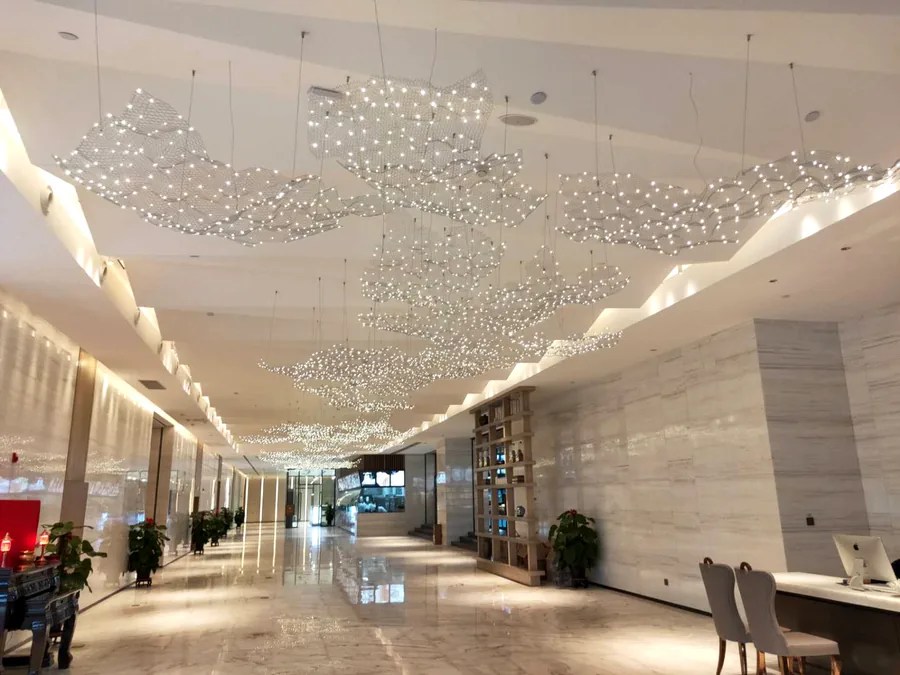
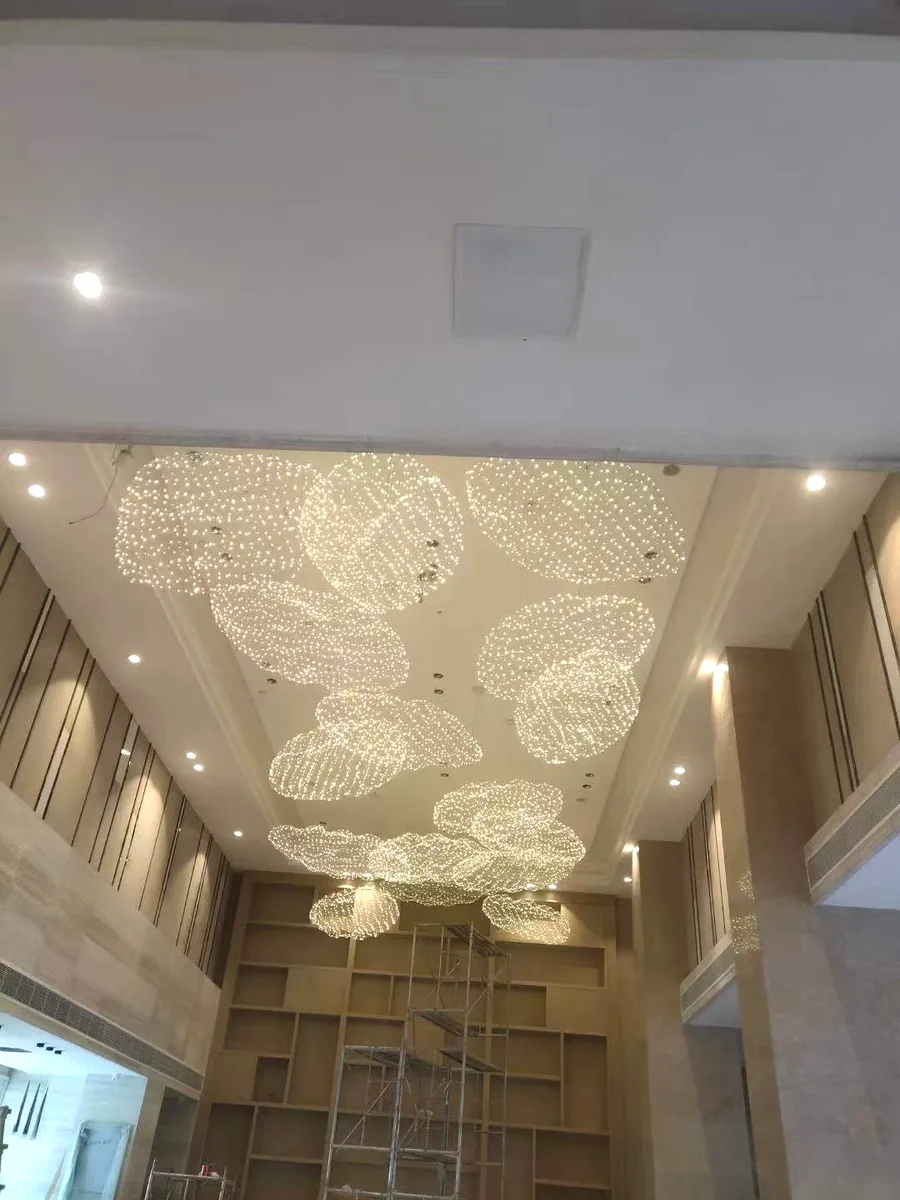
Hotel lobby — mesh cloud light canopy
A corridor-length run of hand-woven mesh clouds suspended over the lobby, each one stitched with LED points so the whole ceiling reads as a star-field — photographed here after handover, with the reception and marble floor in shot.
The hard part: The clouds hang at different heights along a 30-metre run. Each one was surveyed to its own drop length so the layers overlap evenly from the entrance to the lift lobby — and the LEDs were spaced so no dark patch shows from below.
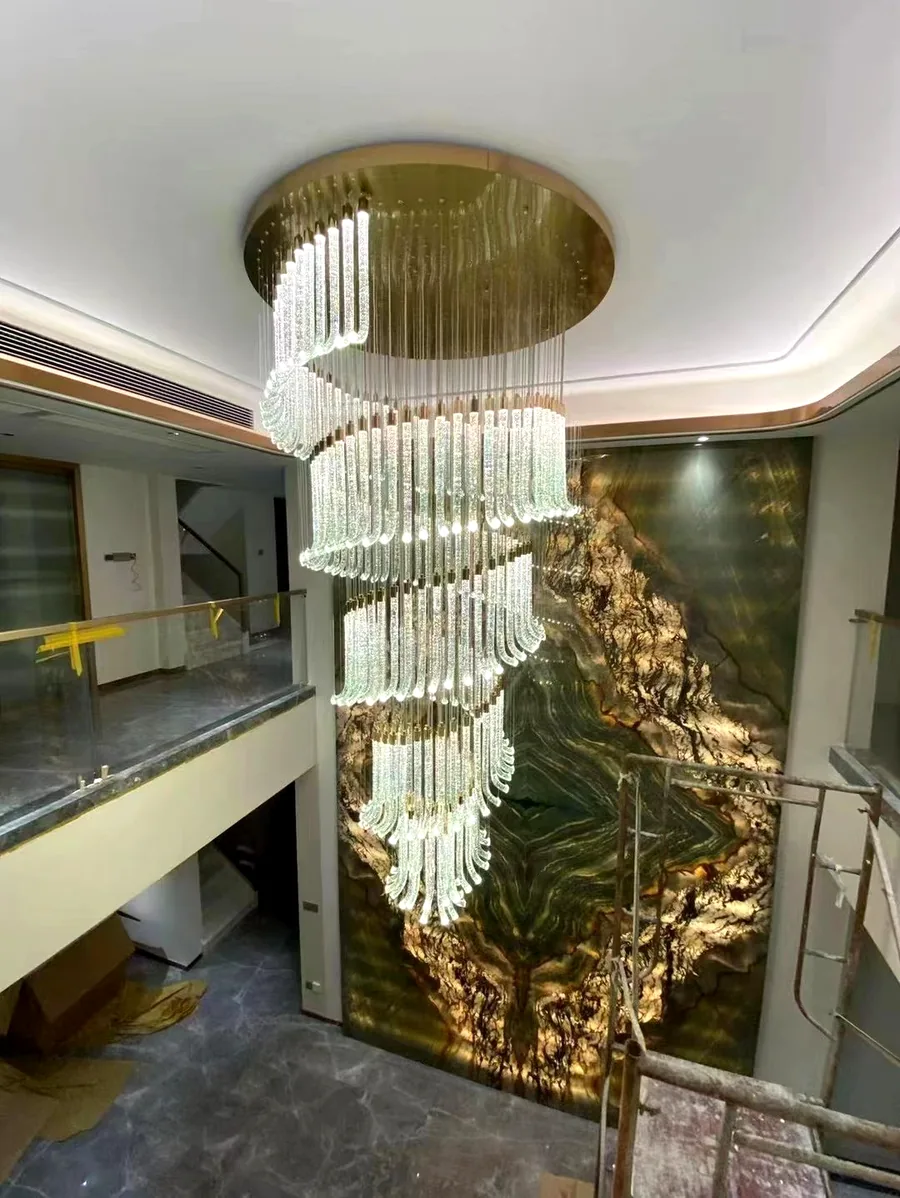
Stairwell — bubble-crystal drop chandelier
Single 3.6 m drop fixture for a five-storey stairwell.
The hard part: The stairwell opening was narrower than the finished diameter. We built the piece in three sections that fit through the opening, numbered every joint, and supplied a 1:1 rigging drawing so the client’s own contractor could assemble it on site in one day.
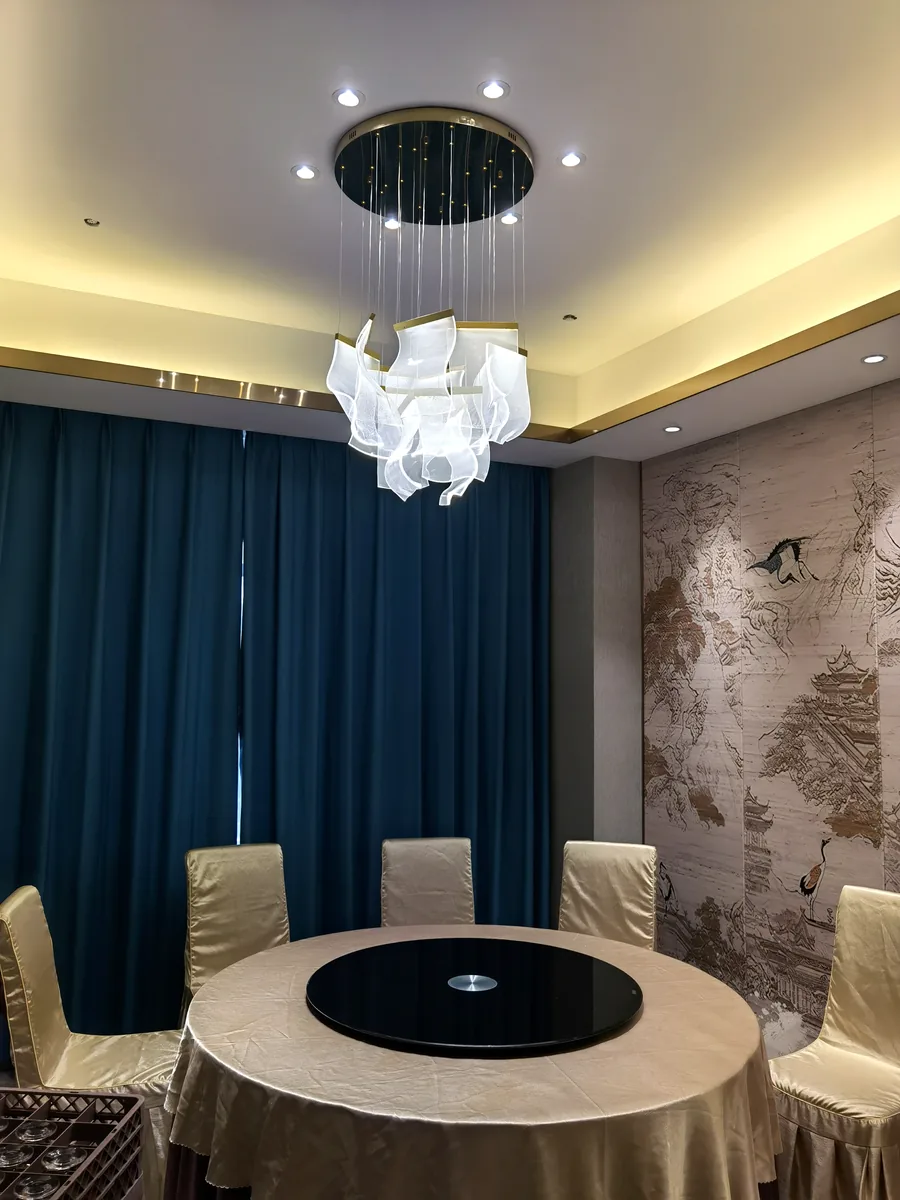
Private dining room — silk wave chandelier
Sculptural silk panels edged in gold, suspended from a round canopy over a private dining table — set against a hand-painted Chinese mural wall, photographed after handover.
The hard part: Keeping finish and brightness identical across a 14-piece run. We held one finish sample from the first batch and matched the rest against it, and selected drivers from a single production lot.
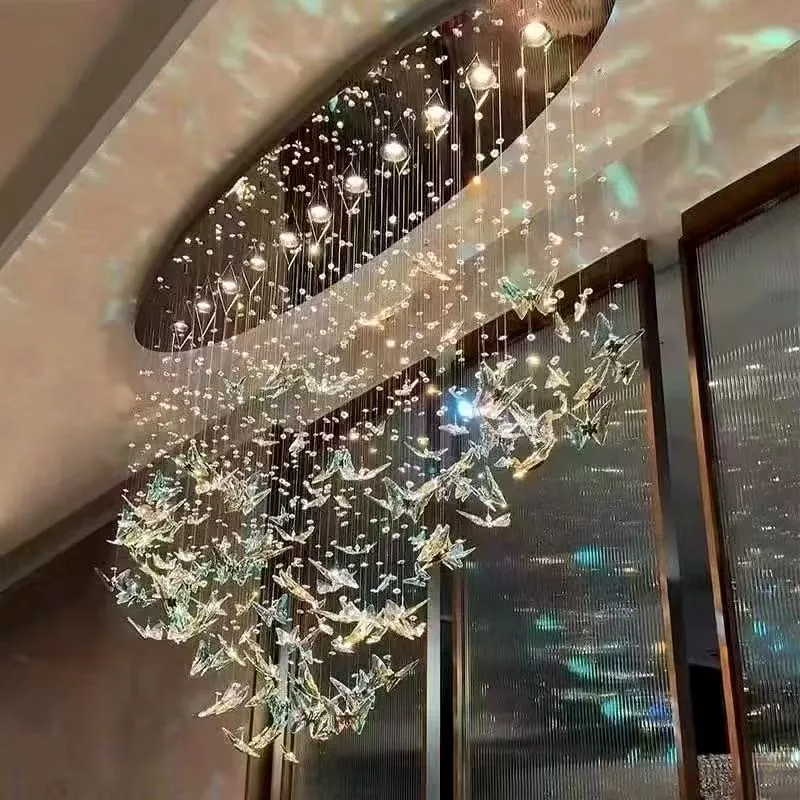
Lobby ceiling — butterfly crystal installation
Sconces, ceiling fixtures and a small feature piece, all in one finish.
The hard part: The client needed the scheme to read as one design despite three fixture types from different processes. We agreed a single finish sample panel first, then released production only once it was signed off.
Show apartment — crystal feature fixture
Crystal fixture plus repeat orders for nine identical units.
The hard part: Nine units meant nine identical fixtures, delivered across four months. Component jigs and a retained finish sample kept the later batches indistinguishable from the first.
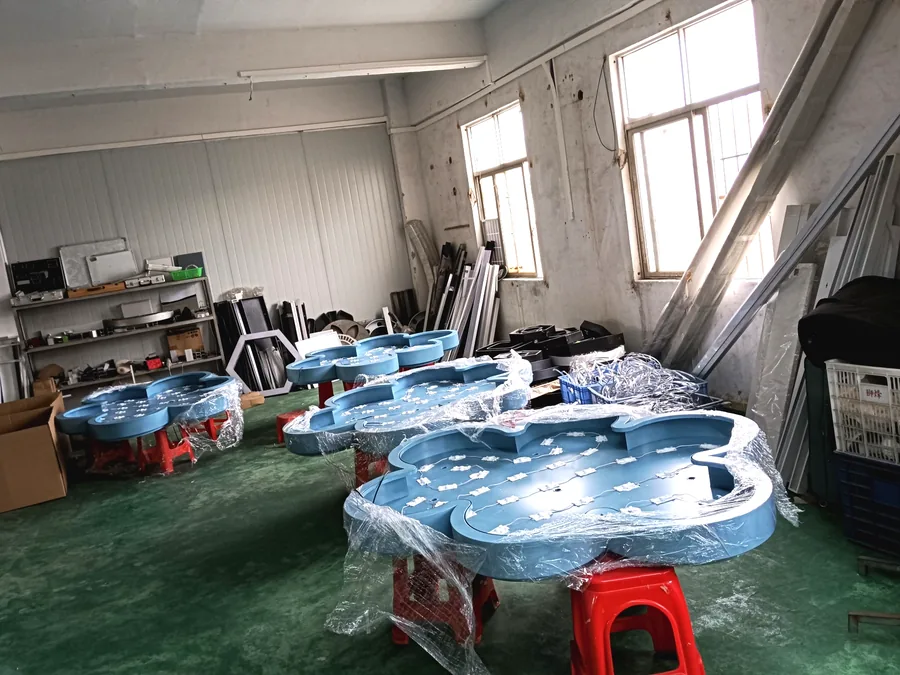
Wholesale programme — OEM runs
Private-label production for a regional distributor across three product families.
The hard part: The distributor needed their own brand on the cartons and product labels, plus consistent quality across repeat orders. We set up a fixed component list and QC checklist per SKU so nothing drifted between runs.
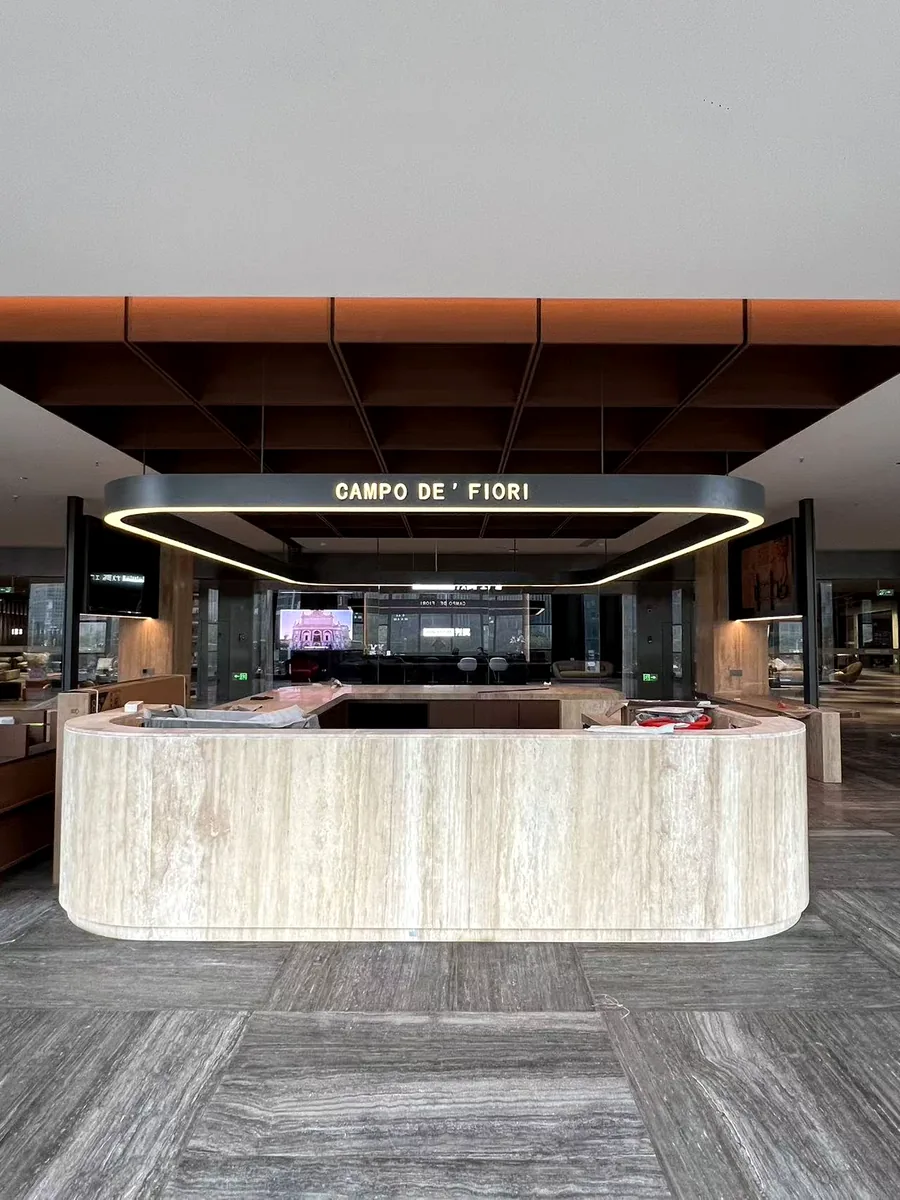
Café brand light — illuminated signage fixture
Linear illuminated sign-light with the café's own artwork cut into the body — shown here installed above the counter, on site.
The hard part: The lettering had to be cut exactly to the client’s brand artwork and light evenly at warm white with no hot spots. We diffused the LED run behind the cut-out, tested the lit effect in the workshop, then packed each unit with the lettering foam-protected for freight.
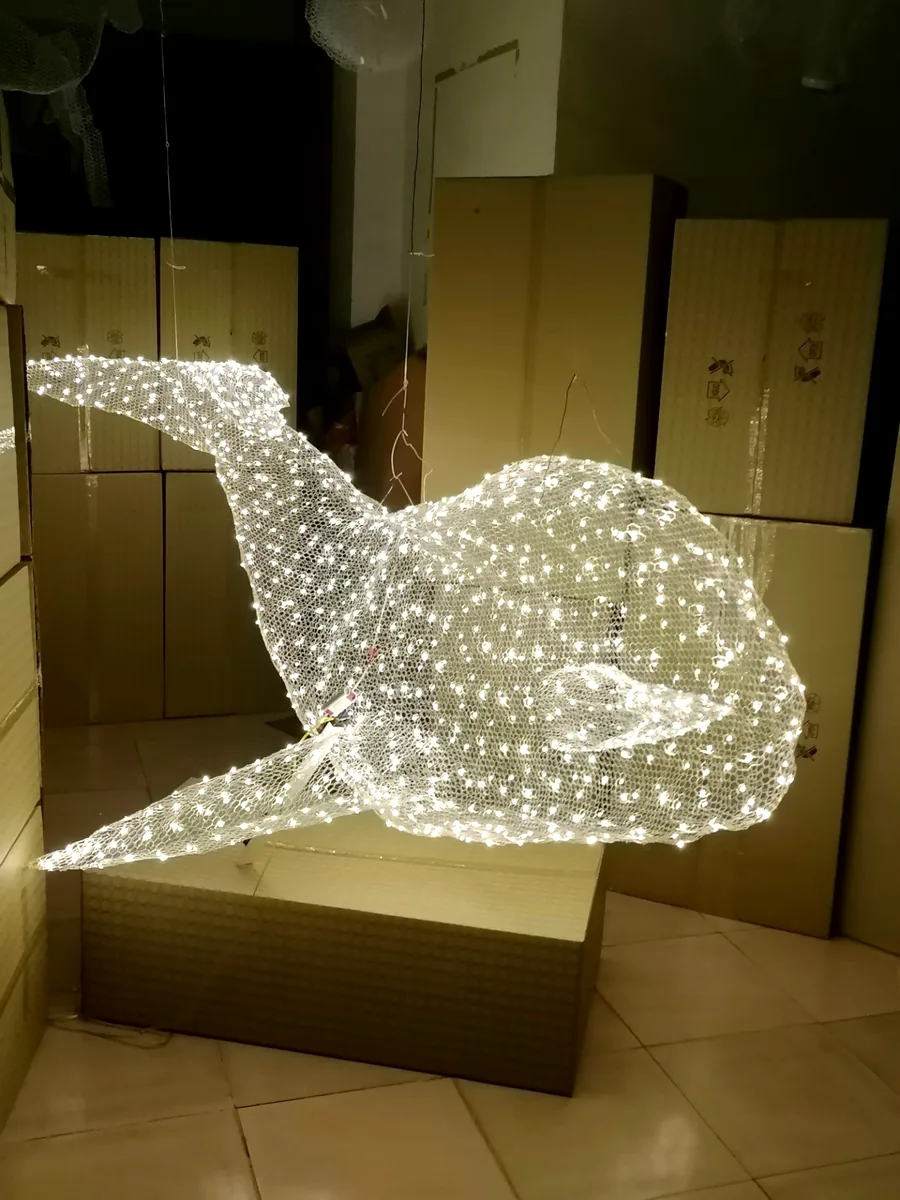
Whale light sculpture — hand-woven mesh art piece
Life-size whale sculptures woven by hand from netting over a shaped armature, with LED points sewn through the mesh. A school of several pieces was built for the same installation.
The hard part: There is no mould for a piece like this — the whale shape is shaped by hand, section by section, and the LED spacing has to read as an even star-field from a distance. We built the first piece as a prototype, adjusted the proportions with the client, then repeated the shape across the school so they swim together.
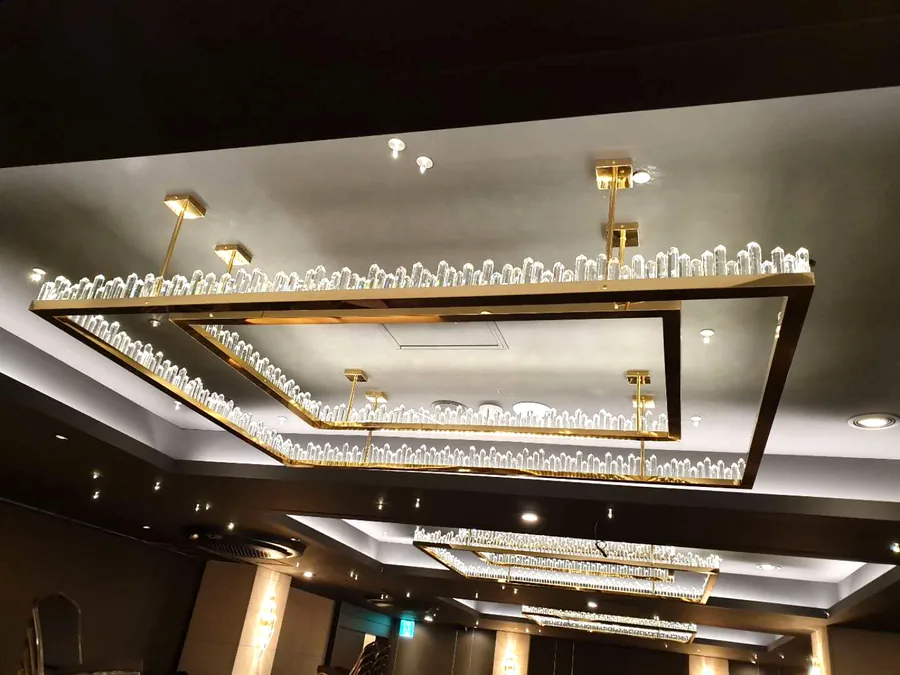
Ballroom ceiling — gold frame crystal chandeliers
A run of gold rectangular frames edged with crystal rods, receding down the ballroom ceiling — photographed after handover with the wall sconces and downlights all working together.
The hard part: Repeating the same fixture down a long ceiling only looks right if every frame hangs dead level — each one was surveyed individually, and the crystal rods were packed numbered per frame so re-lamping years later stays symmetrical.
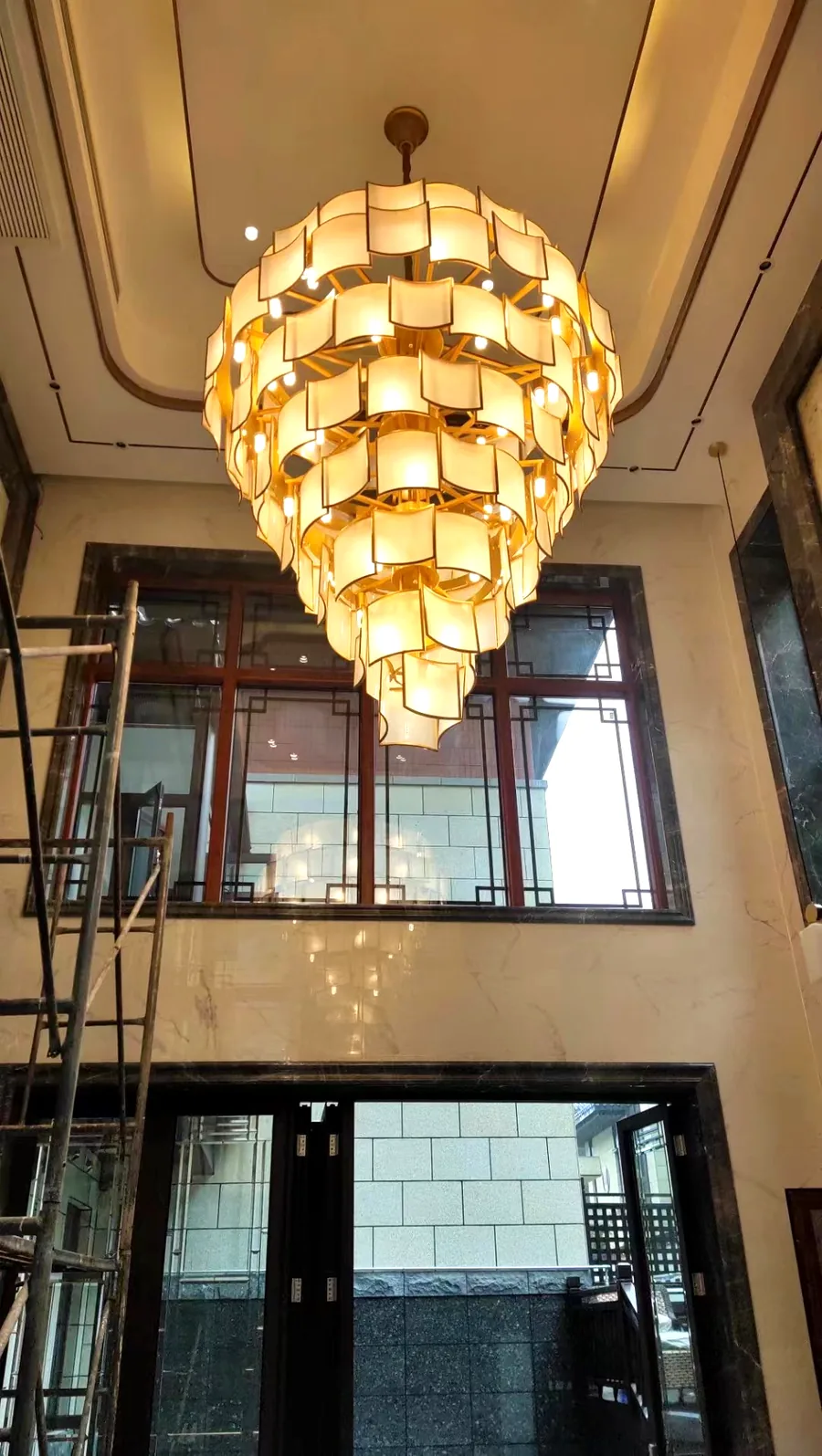
Double-height villa foyer — silk & copper chandelier
A tapering tower of silk panels edged in copper, made for a double-height villa foyer with traditional lattice windows. Hung and trimmed on site with the staircase scaffold still up.
The hard part: The panels diffuse the LEDs so the whole tower glows evenly — the silk was tested for both day view (structure) and night view (glow) before the full set was made.
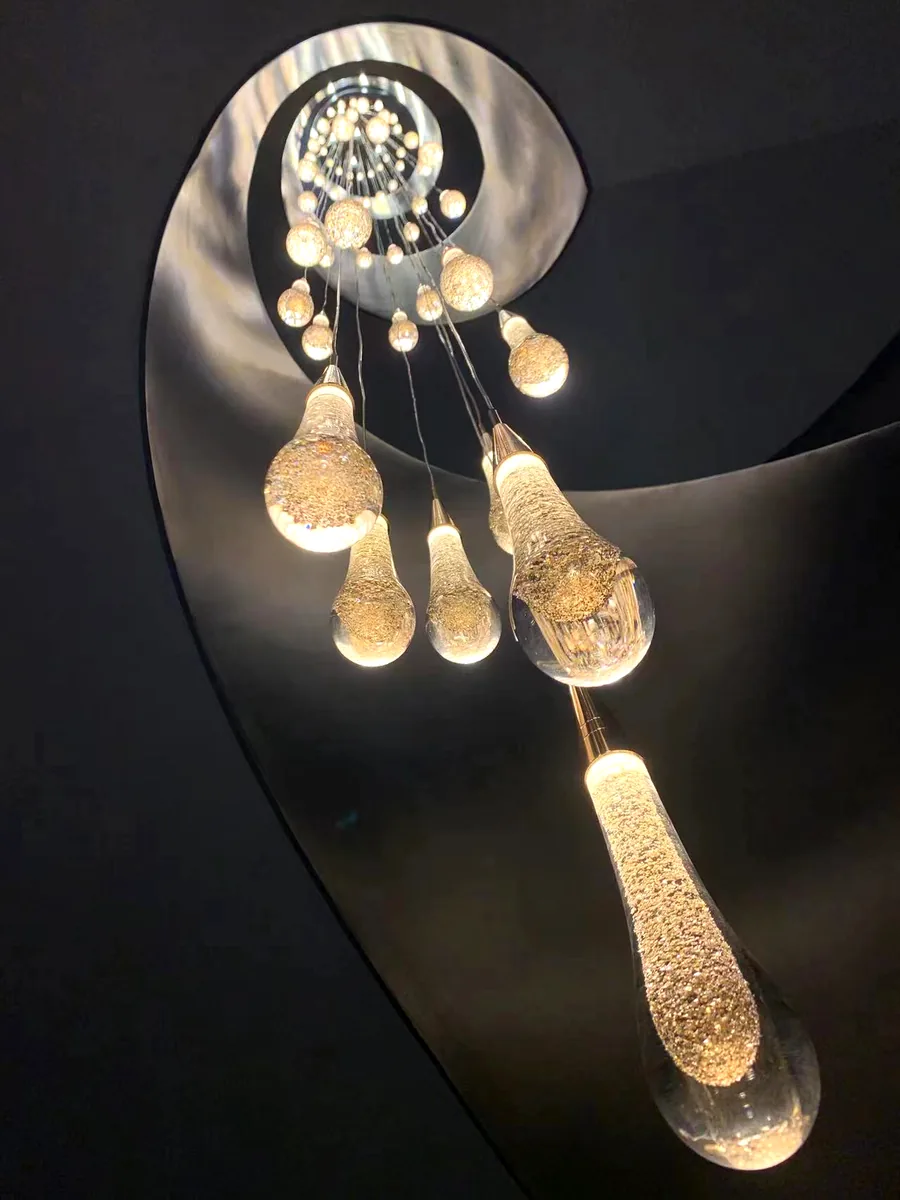
Glass teardrop cluster — spiral staircase installation
Hand-blown glass teardrops with gold-leaf inclusions on slim stems, dropped down a black spiral stairwell. Each drop hangs at its own height so the cluster reads like falling rain frozen mid-air.
The hard part: No two teardrops are identical — they are blown by hand — so the hanging plan was mapped piece by piece to keep the density even from every angle of the staircase.
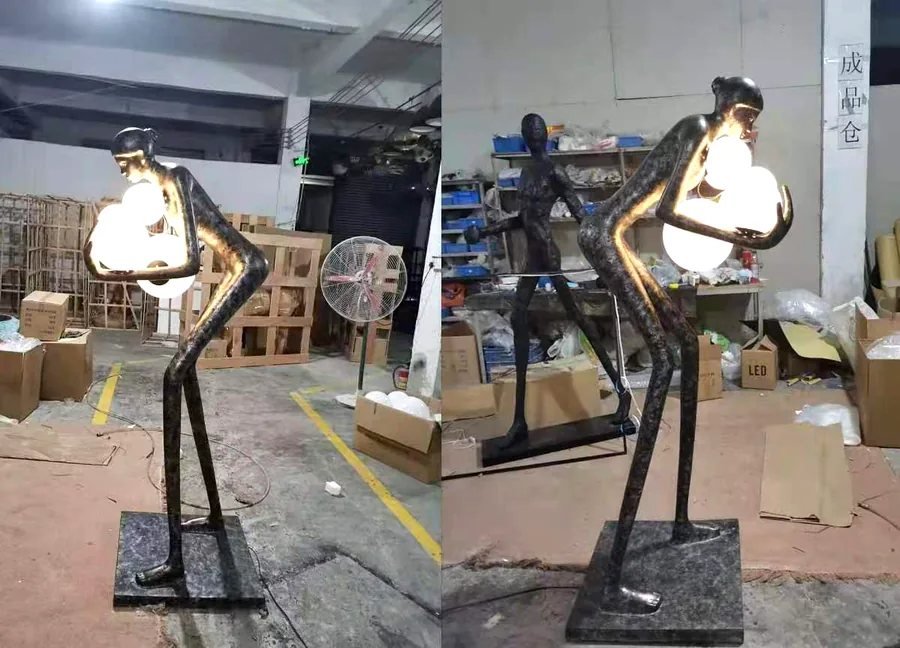
Bronze figure lamps — sculpture holding light
Limited sculptural floor lamps: a hand-finished bronze figure leaning forward, cradling three glowing opal glass orbs. Shown here as a pair on our floor — the second figure mid-assembly in the background.
The hard part: The balance — a forward-leaning figure has to carry the weight of the glass and stay rock solid on the base, so the armature and the centre of gravity were worked out before the finish went on.
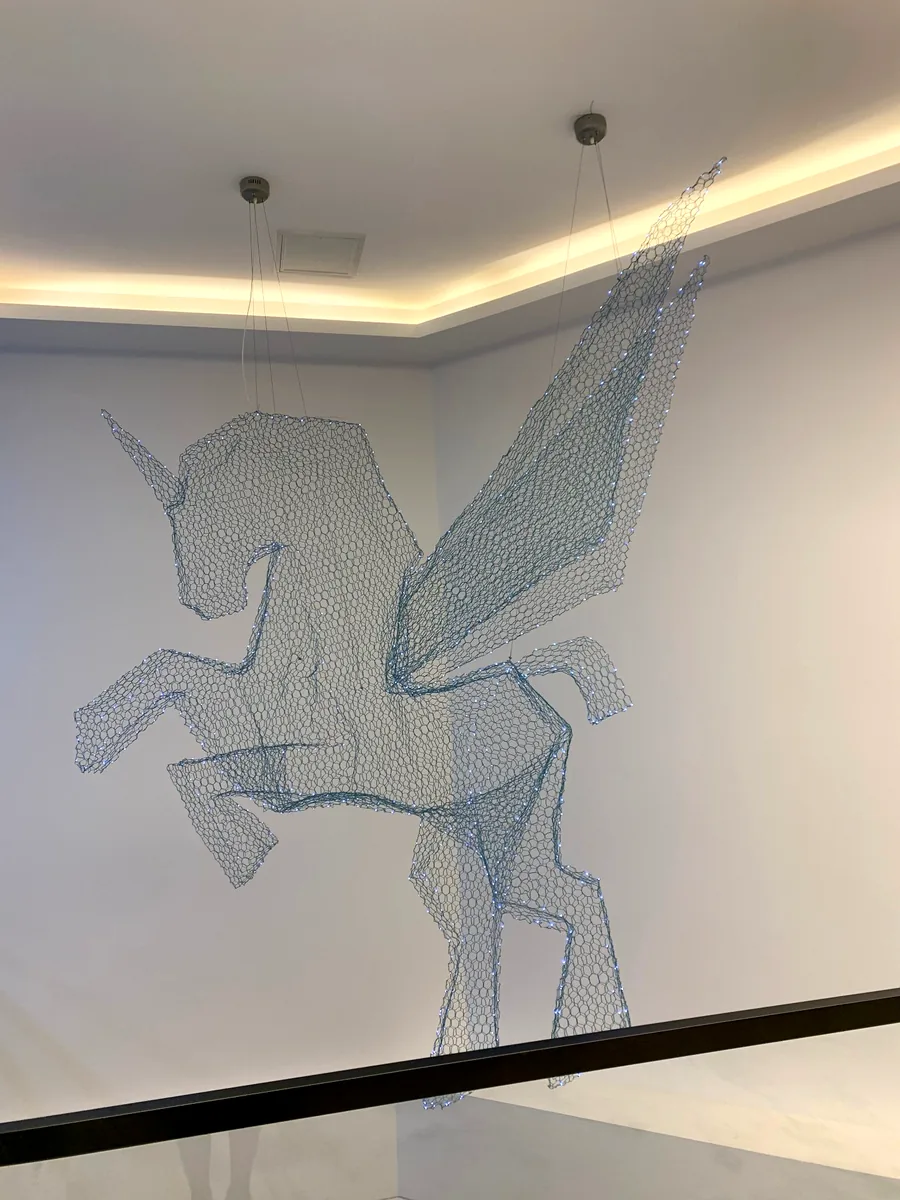
Unicorn light sculpture — hand-woven mesh
A rearing, winged unicorn woven entirely by hand from fine mesh over a shaped armature, with LED points stitched through the body so the outline glows rather than the surface.
The hard part: A figure this recognisable leaves no room to hide — the proportions of the head and legs were re-modelled twice before weaving, because in sculpture lighting a 5% error reads instantly.
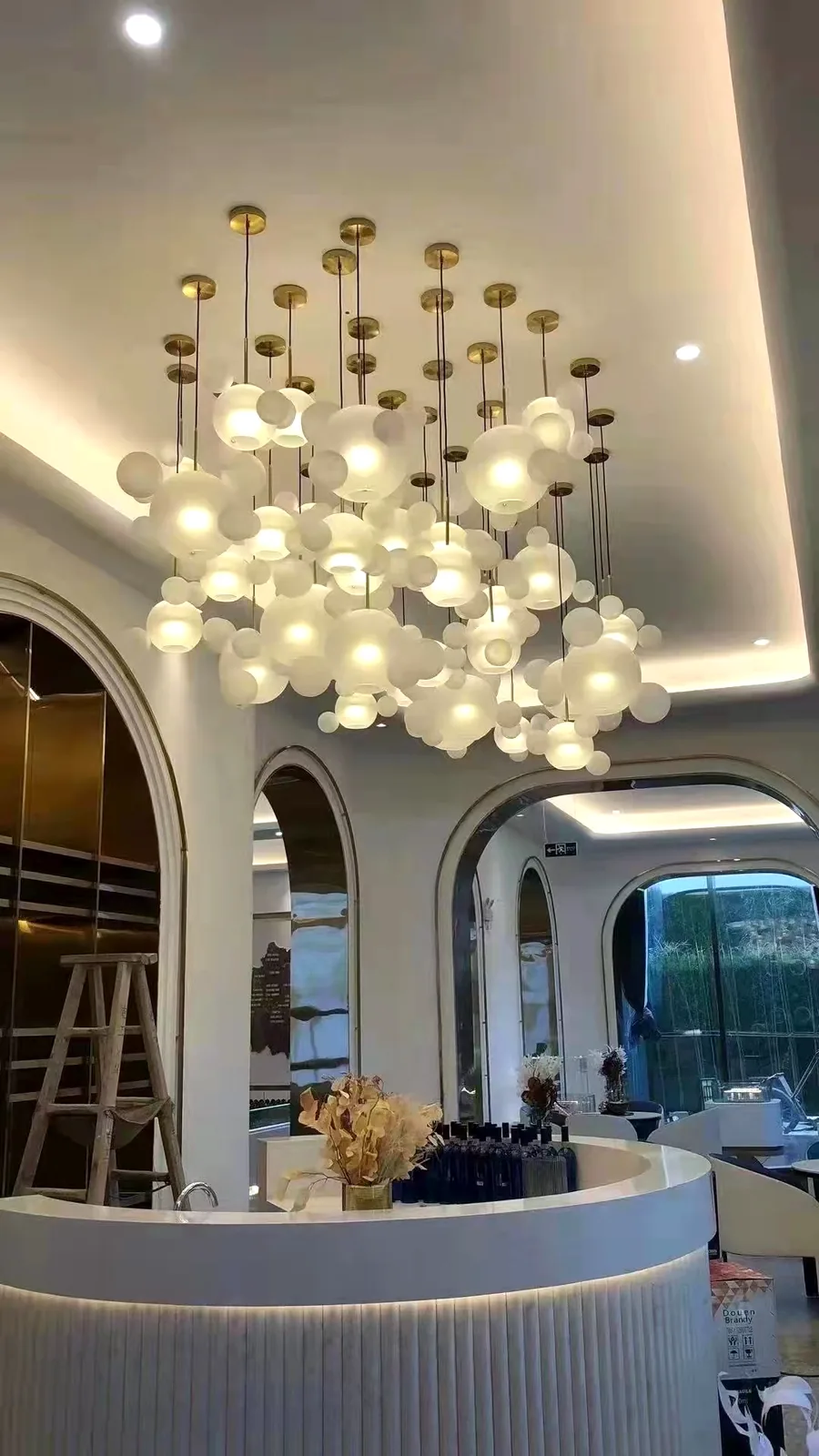
Frosted glass bubble cloud — café counter installation
Dozens of frosted glass bubbles in mixed sizes on brass stems, clustered over a curved café counter. Bubbles are hung at staggered heights so the cloud reads dense at the centre and drifts loose at the edges.
The hard part: Mixing bubble sizes sounds random but is not — the size ratio and spacing were set from a full-size mock-up on our floor before a single pendant was shipped.
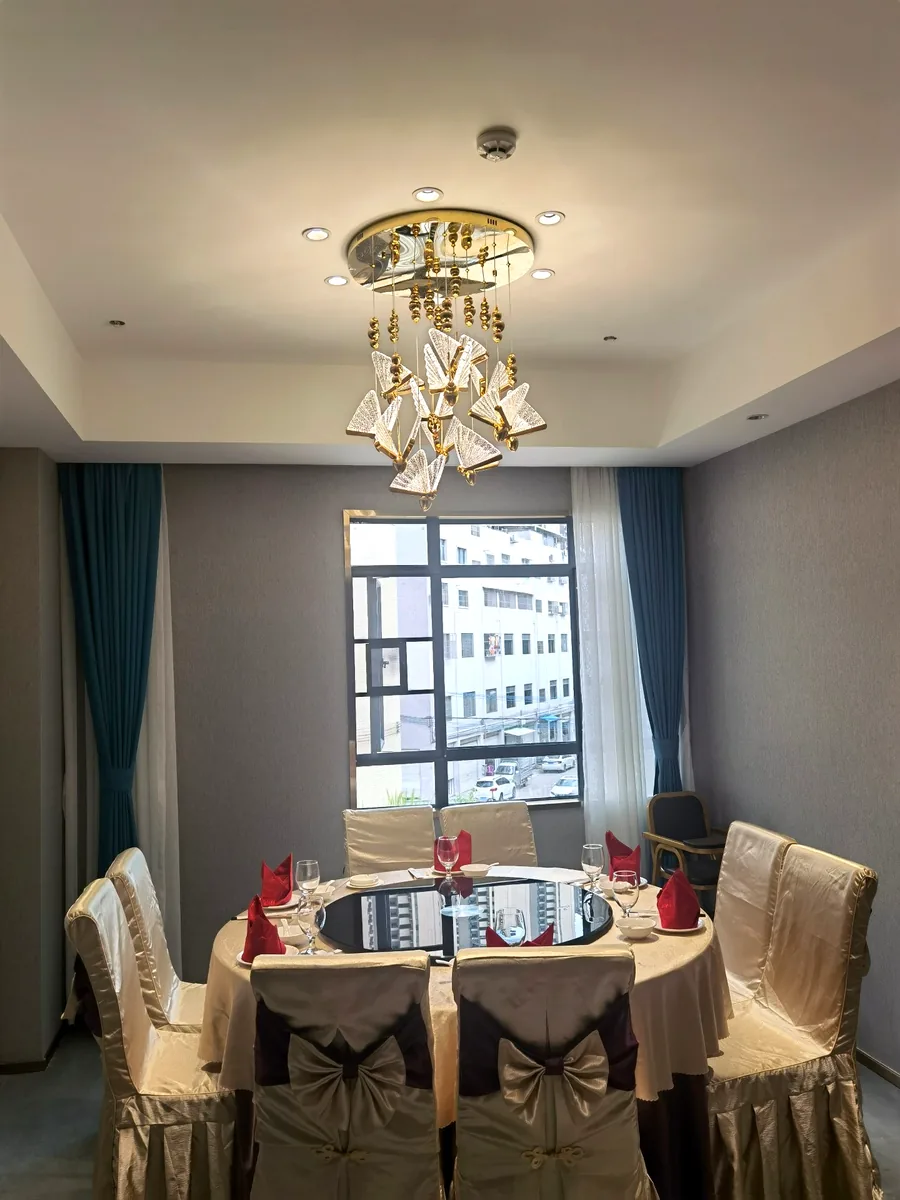
Private dining room — gold butterfly chandelier
Crystal butterfly wings on gold stems, clustered under a round canopy over a private dining table. Sized so the chandelier clears sightlines across the table while still filling the room from the doorway.
The hard part: Height over a dining table is a compromise — low enough to glow in your eyeline, high enough not to block conversation. We mock up the drop against a real table height before we commit the stems.
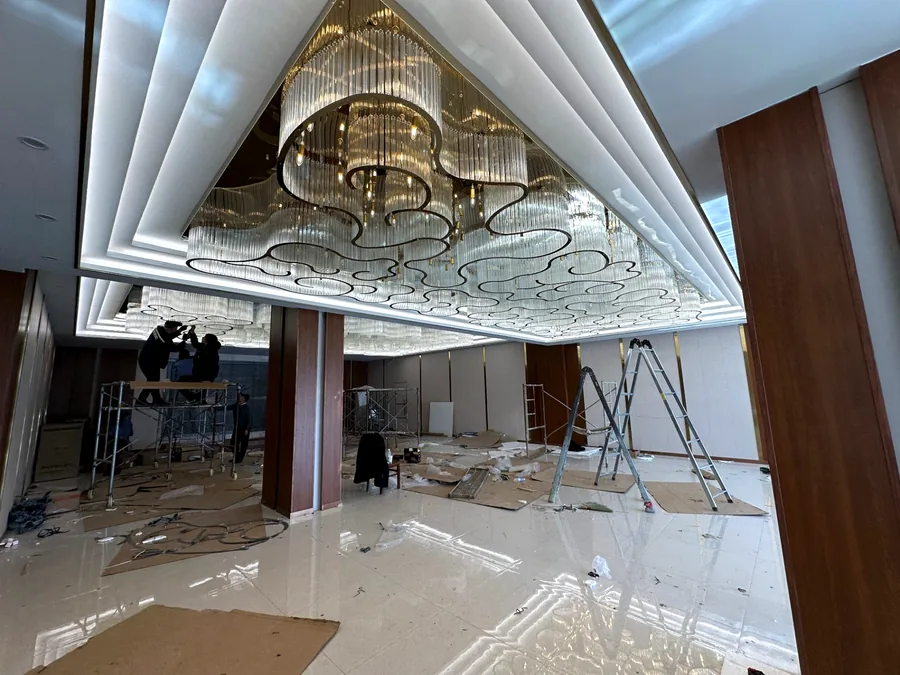
Ballroom ceiling — crystal cloud, installation day
Wide view of the same ballroom: cloud-outline frames with dense crystal rods going up zone by zone. Every frame is surveyed level before the rods go on — with a ceiling this size, a 10 mm error at one end reads as a wave at the other.
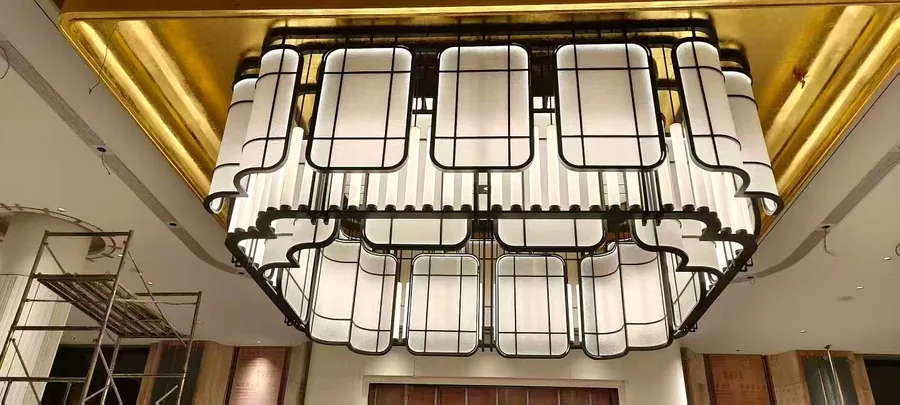
Lobby — tiered silk chandelier, gold frame
Concentric tiers of diffuser panels on a brass frame, widening towards the base so the piece reads as a full cone from below. Panels are individually wired and numbered for packing.
The hard part: Tier spacing has to look even from the staircase viewpoint, not from directly underneath — the frame was adjusted twice on site against the real sightline.
Clients are not named on this page. We publish a client’s name, location or photograph only with their written permission — which is exactly the policy we would apply to your project too.